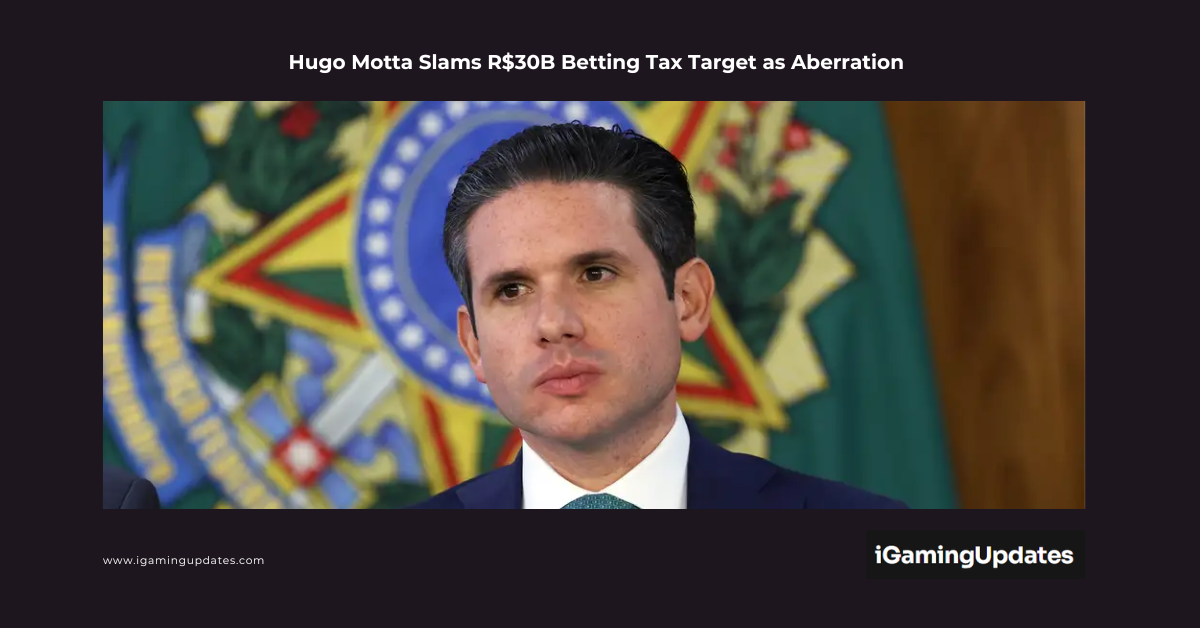
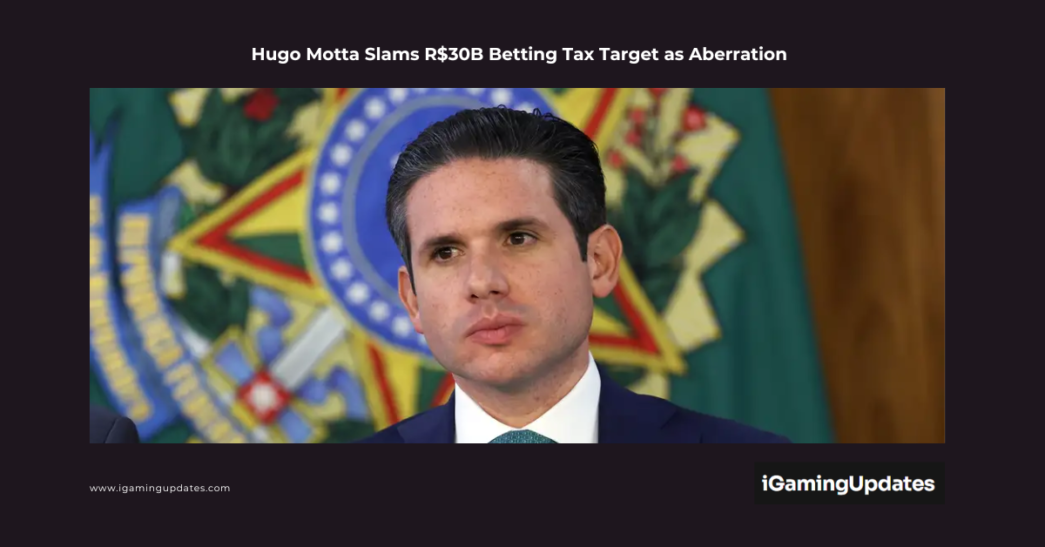
Brazil’s Chamber of Deputies Speaker Hugo Motta has pushed back firmly against accusations that the lower house is shielding the online betting industry from taxation. Speaking in an exclusive interview with Metrópoles, Motta defended the Chamber’s decision to strip the CIDE-Bets tax from the Anti-Faction Bill, calling the Senate’s projected R$30 billion annual revenue figure an “aberration” and insisting the move was driven purely by technical and fiscal realities not political favour.
The Anti-Faction Bill, designed to strengthen Brazil’s fight against organised crime, arrived in the Chamber with an amendment Article 14 that would have introduced CIDE-Bets: a 15% tax on deposits made by bettors on licensed platforms. The Senate had approved the provision in December 2025, with proponents estimating it could generate R$30 billion annually for a newly created National Public Security Fund.
The Chamber voted to remove Article 14 entirely before passing the broader bill, which will now proceed to President Lula for final approval. Motta confirmed the exclusion was necessary to allow the legislation to pass without the broader disagreements caused by the betting tax provision a move he framed as pragmatic rather than protective of the industry.
At the heart of Motta’s argument is the technical infeasibility of the CIDE-Bets collection mechanism. He stressed that Brazil’s existing tax infrastructure is simply not equipped to process this type of levy on betting operations, citing assessments from the Ministry of Finance’s own technical team.
More pointedly, he dismissed the R$30 billion revenue projection outright. “Perhaps 10 or 15% of R$30 billion would be collected at best it’s an unrealistic estimate,” Motta stated. His position was reinforced by a study from the Esfera Institute, delivered to him just hours before the vote, which found that between 41% and 51% of Brazil’s sports betting market is currently operating illegally. The report warned that aggressive over-taxation of the regulated market would function as a competitive advantage for illegal offshore platforms potentially driving Brazil’s channelisation rate below 20%.
On the accusation of protecting the betting sector, Motta was direct: “There is no protection for bets in the Chamber of Deputies. This discourse is not true.” He pointed to the Chamber’s own decision at the end of 2024 to raise taxes on betting as evidence of a balanced approach, and added: “We defend legal certainty. There’s no way to change the tax rate monthly on any sector it removes the planning capabilities of any company.”
Not everyone was convinced. Federal Deputy Reimont accused the right of the Chamber of being “in the hands of betting companies,” while Deputy Otoni de Paula argued the sector had drained money from ordinary Brazilians citing claims that betting moved R$360 billion annually. The removal of CIDE-Bets also drew criticism from lawmakers who had hoped the tax would fund urgently needed public security resources.
Industry groups, however, welcomed the outcome. The Brazilian Institute for Responsible Gaming (IBJR) and the Esfera Institute had both lobbied against the provision, arguing it would accelerate migration to the black market and ultimately reduce, rather than increase, the state’s tax take.
The CIDE-Bets debate is far from over. Lawmakers have committed to addressing betting taxation through separate legislation, meaning the sector faces continued regulatory uncertainty. Three additional proposals are currently in play: a constitutional amendment to channel betting revenues to public security, Bill 5,473 which proposes raising the operator tax rate to 18% by 2028, and a possible standalone CIDE-Bets bill.
For the iGaming industry in Brazil, the short-term relief of avoiding a deposit tax is tempered by the acknowledgement that the fiscal pressure will return. With the illegal market consuming up to half of the sector and annual tax losses estimated at R$10 billion, how Brazil ultimately balances revenue ambition with market sustainability will define the next chapter of one of the world’s most closely watched regulated betting markets.