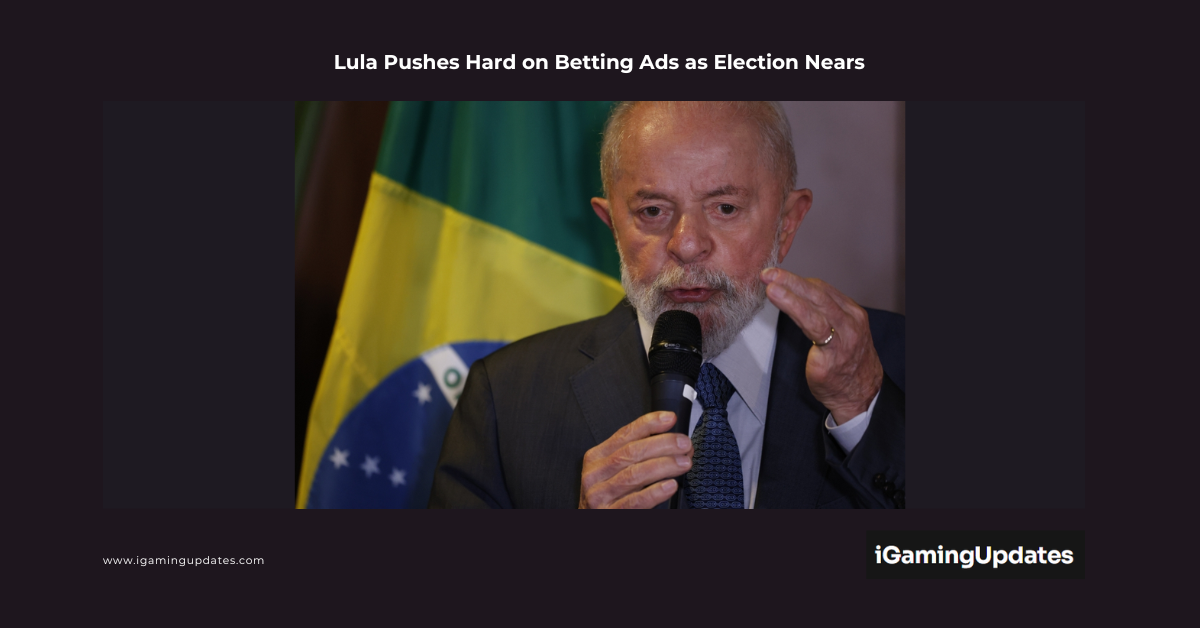
Brazil’s President Luiz Inácio Lula da Silva has sharpened his rhetoric on online betting significantly in 2026, moving from general concern to active political pressure as he frames the industry as a public health and social harm issue with advertising restrictions now firmly in his sights and an October election approaching.
Speaking in an interview, the 80-year-old Lula said online gambling has caused what he described as a massive tragedy for millions of families who have seen household debt soar, adding that if it were up to him, he would close the platforms down entirely. The statement was striking in its directness from a president whose administration oversaw the launch of Brazil’s regulated betting market just fifteen months earlier.
Lula has been making his opposition to the sector increasingly clear over recent months, stating at one point that the industry either needs to face much tougher restrictions or be banned entirely. The language reflects a deliberate political positioning. With an election due in October 2026 and the president prioritising economic growth and debt reduction, the betting sector has become a convenient and politically resonant target.
Health Secretary Alexandre Padilha has aligned firmly with the President’s position, framing gambling as a public health issue that demands resolution in 2026 and drawing direct comparisons between gambling addiction and the former soft governance of tobacco in Brazil. That framing is significant it places betting alongside one of the most successful public health interventions in the country’s history and signals the ideological direction from which the administration intends to approach any new legislation.
In 2026, the Senate and Chamber of Deputies must settle the final terms of a specific bill addressing gambling advertising an issue that has rapidly escalated from regulatory fine-tuning to the possibility of a nationwide prohibition. The advertising debate sits at the intersection of several political fault lines simultaneously football, media, public health, consumer protection and federal revenue making any single outcome difficult to predict.
The commercial stakes involved make sweeping action complicated. Betting companies sponsor almost every one of Brazil’s popular football clubs in the first and second divisions, with current and former players including Vinícius Júnior, Ronaldo Nazário and Roberto Rivellino among the faces of local and foreign brands. Dismantling that sponsorship ecosystem through aggressive advertising restrictions would create immediate conflict with broadcasters, clubs and media groups that have restructured significant portions of their commercial income around betting partnerships.
Figures published in March by a Brazilian commerce and services confederation showed more than 80 percent of the country’s families have some debt to address the highest figure since 2010 with market analysts crediting some of those pressures to the booming online betting industry. The government has latched onto that data point as political justification, even as industry researchers argue the causal link between betting and household debt is far weaker than the administration suggests.
Most analysts believe the government will ultimately pursue a targeted tightening strategy to influence legislation on advertising restrictions, consumer protections and further tax controls, rather than dismantling the market outright. A full repeal would restart a legislative process that took more than a decade to complete, trigger significant economic fallout and cut off a revenue stream the federal government has already baked into its fiscal planning.
For the iGaming industry operating in Brazil, the clearest near-term risk is not a ban it is a material tightening of the advertising rulebook that reshapes how operators can reach and retain users. What that looks like in practice, how broadly it applies, and whether any restrictions survive the political negotiation that will follow their introduction, remain the central questions for a market still finding its footing in only its second year of regulated existence.